Announcements, April 10

Spring 2015 Chocolate Making is postponed. New dates to be determined.

THIS WEEKEND… Episcopal 101: Holy Times & Seasons, Sunday, April 12, 9am: An ongoing exploration of the Episcopal Church for new and long-time members. All are welcome!

Sunday School, Sunday, April 12, 10am: This week, our 3-6 year old class will explore Jesus as the Good Shepherd, while our 7-11 year old class will play with John’s story of Jesus’ appearance to his disciples after he rose from the dead. All kids are welcome, & parents can come too if they like!

 United Thank Offering: The United Thank Offering (UTO) is a church-wide Episcopal ministry that invites people to take home a “blue box”, and put in a coin or bill when we have a moment of gratitude for the many blessings of our lives. We will gather in our “blue boxes” on Mother’s Day, May 10. The funds collected are given to mission and development projects all over the Anglican world, including in our companion diocese of Newala in Tanzania. For more information, visit the UTO station in the Gathering Area.

Ushers & Greeters Needed! These are two simple roles that are very important to helping welcome visitors and newcomers, and making our worship run smoothly. Once a month, could you commit to coming to church fifteen minutes early and helping out?  Serve with a family member or friend. Just one more team of both ‘Ushers & Greeters would fill out our schedules. See the signup sheets in the Gathering Area for more information.

Coffee Hour hosts needed in April and beyond!  Please consider being a coffee host. Sign-up sheets for upcoming months can be found in the Gathering Space. Thanks for lending a hand!

THE WEEK AHEAD… Vestry meeting, Wednesday, April 15, 6:45pm. Any members are welcome to attend.

Thursday Evening Worship in Easter Season: Following the resurrection of Jesus, many of his friends encountered him – at a shared meal, on a lakeshore, walking along a lonely road. In Easter season, at the Sandbox, our Thursday evening informal worship & supper gathering, we’ll be sharing stories of where we’ve encountered Jesus on our journeys. Come hear about another person’s life of faith, or share a part of your own. All are welcome. Worship is at 5:30pm every week, with a simple meal provided afterwards.

Sunday School, Sunday, April 19, 10am: Next week, our 3-6 year old class will learn about the Eucharist and some of the things we use in church, while our 7-11 year old class will work with the story of Jesus on the road to Emmaus.  All kids are welcome, & parents can come too if they like!

Racial Disparities in Dane County – Knowing, Caring, Acting: Our second series of conversations about racism will focus closer to home, as we study the Race to Equity report and other indicators of racial disparities in Dane County, and begin to look for ways we can help create a fairer future. The next series will begin on Sunday, April 19, at 1pm, and Wednesday, April 22, at 7:15pm. All interested participants are welcome. A selection of handouts from our first series of conversations is now available in the Gathering Area.

Evening Eucharist, Sunday, April 19, 6pm: Join us for a simple service before the week begins.

Rector’s Discretionary Fund Offering, Sunday, April 19:Half the cash in our collection plate, and any designated checks, will go towards the Rector’s Discretionary Fund this day and on every third Sunday. This fund is a way to quietly help people with direct financial needs, in the parish and the wider community. Please give generously.

Game Night, Friday, April 24, 6pm: Join us for an evening of games for all ages. Friends, partners, kids all welcome. Bring a snack to share, or come as you are!

Outreach Committee Meeting, Saturday, April 25, 8-10:30am:All are welcome to join our conversations about how St. Dunstan’s can best serve the world with our resources and our hands. We begin with an optional potluck breakfast at 8am.

Sunday, April 26, 9am: “Sing THAT one at my funeral!” Many of us have a list – on paper or in our heads – of hymns and songs we’d like sung or played at our funerals. Bring one of your favorites (or an open mind, if you don’t have a “list) and we’ll talk together about what those songs mean to us and the ideas about life, death, and resurrection they contain. This is our Spirituality & Poetry session for April. Simple funeral planning forms will also be available to complete here or take home.

Sunday, April 26, 11:45am: Wills for Young Families. Attorney and St. Dunstan’s member Mark Rooney will offer a gentle and user-friendly introduction to this topic, as a special gathering of our regular parents’ lunch group.

DeCanstruction, Sunday, April 26, 7:30pm: Help take apart the giant sculptures built from cans and boxes of food, as part of this year’s CanStruction competition, a food- and fund-raiser for Middleton Outreach Ministry. This year’s CanStruction will take place at West Towne Mall, and structures can be viewed there all week, starting Monday, April 20. To help with the “de-Canstruction” work, you must be reasonably able-bodied (but not everybody has to do heavy lifting). Sign up if you’d like to join this year’s team, and work alongside other St. Dunstan’s folks and friends from Madison Vineyard Church.

Spring Clean-Up Day, Sunday, May 3, 12 – 2pm: Join us after the 10 am service to put some “sweat equity” into tending our beautiful buildings and grounds. Wear or bring your scruffy clothes and work gloves. Lunch will be provided!

Parish Picnic, Sunday, June 7, 12:00pm: Come for good food and good conversation at our annual June parish picnic.  We’ll have good food and fun activities for all ages. The picnic will happen rain or shine. Mark your calendar and keep an eye out for more details!

PARISH OPPORTUNITIES… Books Needed for Little Library! With warmer weather many more people are stopping by for a new “read” and we have few books to supply the library. If you have books to donate, please bring them to St. Dunstan’s and put in the labelled box in the Gathering Area. Thanks!

Easter Sermon

Today we have heard the Gospel of the Resurrection according to Mark (Mark 16:1-8). Mark, the earliest Gospel, doesn’t tell of encounters between the risen Jesus and his friends; we never see the resurrected Christ, in Mark’s account. Mark knew about those encounters; he believed in a resurrected Jesus; but he made a literary choice to end his Gospel like this: with the bold, joyous proclamation of the angel, and with the uncertainty, confusion, and fear of those charged with the good news.

I think Mark’s Gospel is particularly apt for talking about the Resurrection. Because for a lot of folks, the idea of somebody literally coming back to life, after being dead – and dead for several days, mind you, not just coding on the operating table in a medical drama – that idea, in our modern, rational, post-Christian world, is frequently met with an uncomfortable silence and retreat – conversational, if not literal.

Resurrection is the church’s fancy word for rising from the dead – both the great single event of Jesus’ return, and the life beyond death that we believe awaits all God’s children, however you draw that circle. (Our church tends to draw it pretty widely.)

And resurrection is hard to talk about, hard to preach about. It’s Easter Sunday, after all – many of you are here as guests, visitors, seekers. Some of you may have drifted away from church and just don’t know whether you can swallow all this stuff anymore. Some of you have never really been part of a church, and wonder what it’s all about, what we’re all about. Resurrection is not the easiest place to start. But it’s Easter Sunday, after all – resurrection is kind of the main idea here. So.

What are we talking about when we talk about resurrection? Well, there’s the most literal meaning: rising again from the dead. Scripture and tradition teach us that Jesus, raised from death by the power of God, has defeated death, once and for all. In the language of our Easter Troparion, which we’ll sing later, Jesus “tramples down death by death.” The famous verse John 3:16, which was our Gospel a few weeks ago, says that God sent God’s son into the world so that those who trust in him shall not perish, but have everlasting life. And today’s lesson from the prophet Isaiah, an Old Testament text which the Church reads in light of the life of Jesus, says, “God will destroy … the shroud that is cast over all peoples, the sheet that is spread over all nations; God will swallow up death forever.”

Of course people still die, in their earthly bodies. The Bible’s authors knew that just as well as we do. But Jesus talked a lot about eternal life, a new life in God beyond our earthly existence. So it became the conviction and teaching of the church that physical death is not an absolute ending, but leads into another kind of life. The resurrection of Jesus opens the door to the resurrection of everybody.

In 1 Corinthians 15, in the verses following today’s Epistle, Paul writes about the centrality of the Resurrection for Christians: “If there is no resurrection of the dead, then Christ has not been raised; and if Christ has not been raised,… then your faith is futile and you are still in your sins. If for this life only we have hoped in Christ, we are of all people most to be pitied. But in fact Christ has been raised from the dead.”

Here’s the thing: it’s easy for us modern, rational, post-Christian Christians to think think that people 2000 years ago were superstitious and naive and didn’t really understand death as we do, so it was easier for them to believe that somebody would come back from death. Not true; if anything, they were probably more in touch with the realities of death than we are, in our world where death is handled by trained professionals, behind closed doors.

People knew perfectly well, in the first century, that people die and their bodies decay. Remember the story in John’s Gospel of Jesus raising his friend Lazarus from the dead? They warned Jesus, “Lord, it’s been three days; when you open the tomb, it is going to smell.”

Death was no mystery to the early Christians. They had to reconcile belief in eternal life beyond the grave with the obvious truth of bodily decay. Searching for an image to help us come to grips with the paradox, Paul offers the everyday magic of a seed sown in the earth giving rise to a plant:  “So it is with the resurrection of the dead. What is sown is perishable, what is raised is imperishable. It is sown in dishonor, it is raised in glory. It is sown in weakness, it is raised in power. It is sown a physical body, it is raised a spiritual body. Listen, I will tell you a mystery!  We will not all die, but we will all be changed… For … this mortal body must put on immortality.”

Paul’s poetic reflection on the mystery of resurrection is echoed in the Eucharistic prayer we use at funerals: “For to your faithful people, O Lord, life is changed, not ended….” With two thousand years of theology and science at my back, I don’t feel that I can really do any better than Paul at putting words to strange and elusive hope of the resurrection of the dead.  The belief that those who have left this life and this world live on, in and with God, is not amenable to proof or explanation. It’s one of the things we take on faith, no more and no less than the church did in Paul’s time.

So that’s one of the things we’re talking about when we talk about resurrection: Death still happens, but Jesus’ rising from death means that death doesn’t have the same grip, the same claim on us, that it had before. That we don’t have to fear death, trusting that those we love, and we ourselves, will have everlasting life in God.

But that’s only part of what it means to be people of the resurrection. Indeed, we are missing out on a good deal of what our faith offers us, and asks of us, if we think of resurrection as an idea that only comes into play in the face of death.

What about resurrection in the face of life?  As a daily orientation, a way of being? A few verses farther along in that same chapter, the apostle Paul writes, “I die every day!” There are so many areas of our hearts, our lives, our world, in need of transformation. Renewal. Resurrection.

A few weeks ago, I dug into the meaning of another of those words we use in church and don’t examine nearly often enough: salvation. I looked at the Greek verb behind that English word, sozo – and all the ways it’s used in the New Testament.

Sozo can mean to save from a dangerous situation. To heal. To make well. To restore. To deliver from an ordeal. To rescue. To free. To keep, preserve, or protect.  And it’s used in situations ranging from real-world illness, danger, or bondage, to the metaphorical and spiritual conditions that mirror those outward realities.

What the centrality of that word and concept in our Christian scriptures says, to me, is that this is God’s intention, God’s desire, God’s purpose for each and all,

in individual lives and human history. Sozo: what God does, stirring mysteriously in human hearts; acting in the spaces left by our freedom, our wills, our choices; subtly bending history’s long arc. To free, to heal, to make well, rescue, deliver. To save.

The word Sozo was on my mind again this week as I reflected on resurrection.

Resurrection faith is much more than simply believing that Jesus rose from death, or even that we will rise from death. It’s believing and trusting that this is the kind of God, God is: the kind of God who acts, sometimes invisibly, sometimes dramatically, to bring wholeness from brokenness, freedom from bondage, life from death.

The tenth-century theologian Symeon wrote that when Jesus becomes fully alive in us, “everything that is hurt, everything that seemed to us dark, harsh, shameful, maimed, ugly, irreparably damaged, is in Him transformed and recognized as whole, as lovely, and radiant in His light.” That’s resurrection faith. (Read the whole poem here.)

The 20th-century theologian and leader Martin Luther King, Jr.,  wrote, “I believe that unarmed truth and unconditional love will have the final word in reality. This is why right, temporarily defeated, is stronger than evil triumphant.” That’s resurrection faith.

And living as people of resurrection faith means seeking resurrection in this world, this life. Expecting renewal, reconciliation, restoration. And more than seeking and expecting: colluding with it. Becoming a co-conspirator with God in the ongoing always-and-everywhere work of transforming the world towards hope and healing, justice and mercy, love and delight. That’s what church is all about, what we’re all about. Bearing witness to resurrection. Being agents of transformation.

In a few moments, we will renew our baptismal covenant, affirming again the promises that are made every time a child or adult is baptized in an Episcopal church. We renew our baptismal intentions at Easter because one of the ancient meanings of the baptismal rite is passing through death into new life in Christ. And also because this day, Easter Day, is a wonderful time to re-commit to the practices that sustain and strengthen us as people of resurrection. People who seek and strive and hope for new life, not only in the next world, but in this one, here and now.

Alleluia! Christ is risen.

Announcements, 4/3

Maundy Thursday, Thursday, April 2, 6pm: in our Maundy liturgy, we will walk through Jesus’ final evening with his friends before his arrest, including a simple shared meal, foot washing (optional), and the stripping of the altar. Please bring 30 pieces of change (dimes, nickels, pennies) – or just a handful. People of all ages are welcome in this liturgy.

Good Friday Liturgies, Friday, April 3, 12 noon and 7pm: A solemn liturgy recalling Christ’s death on the cross. Our 7pm service is followed by the Good Friday Wake, a one-hour vigil, gathered around an icon of Jesus in the tomb. Reflect on the poetry, art, and Scripture of Jesus’ death and the grief of his friends. Hot cross buns and tea will be served.

Friday, April 3, 4pm, Children’s Good Friday Service: This service is best for kids ages 3 to 10. We will walk the Stations of the Cross together, exploring the story and what it means to us.

Easter Vigil, Saturday, April 4, 8pm: One of Christianity’s most ancient and beautiful liturgies: fire and water, music and art, darkness and light, death and resurrection! Please bring bells and noisemakers. We will use INCENSE at this liturgy. The Great Vigil liturgy is appropriate for adults, youth, and older kids; it is about two hours long.

 Easter Sunday, Sunday, April 5, 8am & 10am: Celebrate Easter with the St. Dunstan’s community! After each service, there will be an Easter egg hunt for children. Visitors and guests are very welcome!

Birthdays and Anniversaries, Sunday, April 5: It is our custom to use the first Sunday of each month to pray for those with birthdays and anniversaries in that month. Please come forward when invited, during the Announcements, to receive the congregation’s prayers and good wishes.  Some people choose to put a donation in the little wooden church in thanksgiving for the occasion; those donations are passed on to charitable causes in the wider world.

Healing Prayer: On first Sundays, during Communion, one of our ministers will be available for those who seek prayers for themselves or on behalf of others.

Evening Eucharist, Sunday, April 5, 6pm: Join us for a simple service before the week begins.

Spring 2015 Chocolate Making Sign Up: Our Spring Chocolate Event will be after Easter this year. Mark your calendars for Friday evening, April 10, 6-8pm and Saturday, April 11, 9am-12noon. An order/signup sheet is in the Gathering Space, below the big calendar. Sign up by April 5 (Easter Sunday)!

Holy Week Offerings:  As is our custom, offerings made during our Holy Week services will go to support particular agencies and ministries. Maundy Thursday offerings will go to Domestic Abuse Intervention Services (DAIS) here in Madison. Good Friday offerings will go to the Episcopal Diocese of Jerusalem and the Middle East. Easter Vigil offerings will go to Episcopal Relief & Development. It is helpful to our tellers, who count our donations, if you indicate on the memo line which agency you are supporting. Thank you for your generosity.

THE WEEK AHEAD…

Thursday Evening Worship in Easter Season: Following the resurrection of Jesus, many of his friends encountered him – at a shared meal, on a lakeshore, walking along a lonely road. In Easter season, at the Sandbox, our Thursday evening informal worship & supper gathering, we’ll be sharing stories of where we’ve encountered Jesus on our journeys. Come hear about another person’s life of faith, or share a part of your own. All are welcome. Worship is at 5:30pm every week, with a simple meal provided afterwards.

Madison-Area Julian Gathering, Wednesday, April 8, 7:15-9pm, at St. Dunstan’s: The Madison-Area Julian Gathering will begin meeting again after our winter break.  Please come and bring Spring with you!

Episcopal 101: Holy Times & Seasons, Sunday, April 12, 9am: An ongoing exploration of the Episcopal Church for new and long-time members. All are welcome!

Sunday School, Sunday, April 12, 10am: This week, our 3-6 year old class will explore Jesus’ Jewish roots in the story of the Synagogue and the Upper Room, while our 7-11 year old class will play with John’s story of Jesus’ appearance to his disciples after he rose from the dead. All kids are welcome, & parents can come too if they like!   

Books Needed for Little Library! With warmer weather many more people are stopping by for a new “read” and we have few books to supply the library. If you have books to donate, please bring them to St. Dunstan’s and put in the labelled box in the Gathering Area. Thanks!

Calling all Church Women! Women’s Mini Week 2015, August 13 to August 16, at Camp Lakotah in Wautoma, Wisconsin: You are invited to the 39th Annual Women’s Mini Week. This year’s theme is “Surprised by Joy!” For registration materials and to answer questions, visit the website: www.womensminiweek.org .

Your help is needed to complete the Community Build at Canstruction® Madison 2015!  You can be a superhero by purchasing a “Can of Hope” for our Superhero Phone Booth which will be built in the mall center court. For every $10 donation, you can submit one name to be featured on the label of a Superhero Can. One can make a difference®.  One Can® to prove that every act of kindness makes a difference. Thanks to a generous donor, the first $5,000 in donations will be matched!  Give hope today.

Maundy Thursday

Preached by the Rev. Miranda Hassett, April 2, 2015

We recently created some new welcome leaflets for our church, and one of them is titled, “What do Episcopalians Believe?” Seeing a photo on Facebook, one member of our congregation quipped, “We believe in food.” She’s right. We do. We believe in food. We believe in preparing good food, sharing it with each other, eating together.

We also believe in this holy meal we share every Sunday, the Eucharist. If you come from another church or tradition, regular Eucharist might not have been a thing; and in the years before the 1979 Book of Common Prayer, in many parts of the Episcopal church Eucharist was monthly, not weekly. But since the liturgical renewal of the ‘60s and ‘70s,  celebrating the Eucharist has become central to the lives of our churches, as it was in the earliest days of the church. We believe in this holy and symbolic meal by which we follow Jesus’ instructions, every week, to do this in remembrance of him.

Now, when I say symbolic, I don’t mean that the Eucharist is symbolic of Christ’s presence. It is not exaggerating to say that wars have been fought over whether the Eucharist is rightly described as symbolic, and what that means. In our church, our understanding, our teaching, is that in the sacrament of the Eucharist, Jesus is not just present symbolically, or in memory. There is something more than mere symbol or memory going on. Jesus is present in reality, in some way that is mysterious, ineffable, and true.

My daughter occasionally likes to hold a tea party, as one does, and when she pours tea from her pink plastic princess teapot into my pink plastic teacup, she will often remind me that the tea she is pouring is NOT, as a parent might mistakenly believe, pretend; instead, she says, it is invisible but real. Invisible but real. That is more or less what our church teaches, what I believe, about the presence of Christ in our sacrament of Holy Eucharist.

So when I say that the Eucharistic meal is symbolic, I don’t mean it’s symbolic of Jesus. I mean that it’s symbolic of a meal. Remember the little holy wafers many churches use? – we use them now and then. Someone quipped once about those wafers, “I can believe that it is Christ,  but no one will convince me that it is bread.” Now, most of the time, we use something rather more like real bread here,  but still, that little morsel of bread and sip of wine isn’t much like a real meal.

One of the things we do on Maundy Thursday is connect those dots again, as we re-tell the story of the first Last Supper, when Jesus gathered with his friends for one more meal together. That really was a shared meal, sitting or lying around a table together, laughing, telling stories, sharing memories and hopes, singing songs, and eating.

In the early decades of the church, the Eucharist was celebrated that way – as a community meal with a special meaning and holiness. The community meal became separated from the ritual meal fairly early on, however, apparently because of class differences within the churches. Listen to what Paul writes in the eleventh chapter of the first letter to the church in Corinth: “I cannot commend you, because when you come together, it is not for the better but for the worse…. For when you come together as a church, it is not really to eat the Lord’s supper. For when the time comes to eat, each of you goes ahead with your own supper, and one goes hungry and another becomes drunk. …. What! Do you not have homes to eat and drink in? Or do you show contempt for the church of God and humiliate those among you who have nothing? What should I say to you? Should I commend you for this behavior?…  My brothers and sisters, if you are hungry, eat at home, so that when you come together, it will not be for your condemnation.”
It seems that everyone was brown-bagging it, bringing food from home, and the rich brought lavish meals – including beverages – and the poor sometimes had nothing, and people were not sharing; and this was creating divisions and ill feelings within the Christian community which were hurting their Eucharistic fellowship.  Can you imagine that? It would never happen at St. Dunstan’s! …

So over time, the church’s leaders said, we can’t do this anymore. Sharing a holy ritual meal is fine, but sharing an honest-to-God supper with each other, across all our differences of circumstance – that’s just too complicated and hard. What a sad and human story. And so the Eucharist became separate from the meal, became this attenuated little ritual feeding, a bite and a sip.

But we put it back together, the meal and the Eucharist, once a year, at Maundy Thursday.  And we celebrate the Eucharist in the context of our conversations, our sharing with our neighbors, passing the bread and wine just as we pass the olives and the grapes, sharing Christ’s body and blood with the person with whom you’ve just been chatting about weather and family and garden plans. This one evening, once a year, we restore an ancient unity, the sacrament of the holy meal and the holiness of an ordinary meal in fellowship.

We’ll take a little time now, before we continue in our worship, for more conversation at table. I invite you to share memories of a shared meal that’s important to you – a time when people gathered at table to share food and companionship. It might be a particular memory that comes to mind, or it might be something that’s a regular part of life, something you do every year with family or friends that’s important to you. What’s special about it? or memorable? A sacrament is the outward sign of some inward grace or blessing; would you describe the meal you remember as sacramental? …

Maybe another year:

Eucharistic Universe

Our Universe is Eucharistic in its nature. Since the “great flaring forth” 13.7 billion years ago, all beings have been engaged in the exchange of energy. Everything arises, has its manifest time, and then surrenders itself to become food for another to arise into being. Each of us enters into a sacred trust upon receiving the energy given us; if wise, we use that energy for the furthering of the Universe adventure, then relinquish our life so that others may come into being. From stars to mites, everything eventually becomes good food so that life might continue.


We might describe the miracle and mystery of photosynthesis with curiously familiar language: a prokaryotic cell learned to eat the sun, storing that life energy to later release it to another so that life might continue. Is that not what we do in our liturgical ritual: eat of the Son that we might remember life was given in order to give us life?

-Sister Catherine Grace CHS

http://www.edgeofenclosure.org/lentvb.html

Announcements, 3/25

A BIG THANK YOU to all the volunteers who cleaned in the Meeting Room, Gathering Space, Atrium and Nave last Sunday.  Thanks to all for making the church shine, and thanks to our fearless leaders, Joanne and Helen!

THIS WEEKEND… The Stations of the Cross in Downtown Madison, Friday, March 27, 12pm & 5pm: Walk the story of Jesus’ journey to the cross on the streets of a modern city.  As we walk the fourteen traditional Stations of the Cross, we will reflect together on how we can trace those events in the geography of Madison today – our issues, stories and struggles. We will start on the sidewalk near the Federal Courthouse, across from the Overture Center, and end in the garden at Grace Church on the square. The total walk will be about 1.2 miles, and it takes about 45 minutes. Come at noon or 5pm, as your schedule permits. All are welcome.   

“Palm Saturday”, Saturday, March 28, 10:30am – 12pm: Kids, parents, grandparents and friends are invited to make Easter crafts and communion bread, and to take part in a gentle, age-appropriate and participatory telling of the whole Easter story, presented by the youth and adults of our church. This event is best suited for kids ages 3 to 10. All are welcome!

Palm and Passion Sunday, March 29, 8 and 10am: We begin our liturgy with a Palm Procession, recalling Jesus’ triumphal entry into Jerusalem, then proceed to the reading of the Passion Gospel according to Mark. This is a solemn and powerful service, and our doorway into Holy Week. People of all ages are welcome in this liturgy.

Backpack Snack Pack, Sunday, March 29 after church: The kids and families of St. Dunstan’s are invited to join our Madison Vineyard Church neighbors in preparing “Backpack Snack Packs,” to help local school children from low-income households to have nutritious snacks available over the weekend. We’ll work in the Meeting Room at St. Dunstan’s, following the 10 am service.

Maundy Thursday Meal Sign-up: Our Maundy Thursday liturgy (April 2, 6pm) includes a shared meal as we remember Jesus’ final meal with his friends before his crucifixion. Sign up in the Gathering Area to contribute lentil soup, hummus, olives, or other items. Thanks for all your offerings!

Spring 2015 Chocolate Making Sign Up: Our Spring Chocolate Event will be after Easter this year. Mark your calendars for Friday evening and Saturday, April 10 – 11. An order/signup sheet is in the Gathering Space, below the big calendar. Sign up by April 5 (Easter Sunday)!

Holy Week Offerings:  As is our custom, offerings made during our Holy Week services will go to support particular agencies and ministries. Maundy Thursday offerings will go to Domestic Abuse Intervention Services (DAIS) here in Madison. Good Friday offerings will go to the Episcopal Diocese of Jerusalem and the Middle East. Easter Vigil offerings will go to Episcopal Relief & Development. It is helpful to our tellers, who count our donations, if you indicate on the memo line which agency you are supporting. Thank you for your generosity.

Tools for Tanzania Update: Thanks to your generosity, we have raised $540 of our goal of $800 so far! Thanks to all who have contributed. If you’ve not yet made a gift to this project and would like to help send better farm tools to our brothers and sisters in the very rural Diocese of Newala, put a check in the offering plate with “TZ Tools” on the memo line, and thanks again!

HOLY WEEK SERVICES … Maundy Thursday, Thursday, April 2, 6pm: in our Maundy liturgy, we will walk through Jesus’ final evening with his friends before his arrest, including a simple shared meal, foot washing (optional), and the stripping of the altar. Please bring 30 pieces of change (dimes, nickels, pennies) – or just a handful. People of all ages are welcome in this liturgy.

Friday, April 3, 4pm, Children’s Good Friday Service: This service is best for kids ages 3 to 10. We will walk the Stations of the Cross together, exploring the story and what it means to us.

Good Friday Liturgies, Friday, April 3, 12 noon and 7pm: A solemn liturgy recalling Christ’s death on the cross. Our 7pm service is followed by the Good Friday Wake, a one-hour vigil, gathered around an icon of Jesus in the tomb. Reflect on the poetry, art, and Scripture of Jesus’ death and the grief of his friends. Hot cross buns and tea will be served.

Easter Sunday, Sunday, April 5, 8am & 10am: Celebrate Easter with the St. Dunstan’s community! After each service, there will be an Easter egg hunt for children. Visitors and guests are very welcome!

THE WEEKS AHEAD…. Thursday Evening Worship in Easter Season: Following the resurrection of Jesus, many of his friends encountered him – at a shared meal, on a lakeshore, walking along a lonely road. In Easter season, at the Sandbox, our Thursday evening informal worship & supper gathering, we’ll be sharing stories of where we’ve encountered Jesus on our journeys. Come hear about another person’s life of faith, or share a part of your own. All are welcome. Worship is at 5:30pm every week, with a simple meal provided afterwards.

Books Needed for Little Library! With warmer weather many more people are stopping by for a new “read” and we have few books to supply the library. If you have books to donate, please bring them to St. Dunstan’s and put in the labelled box in the Gathering Area. Thanks!

Do you like to feed people? Consider joining our St. Dunstan’s Meals Network, to provide a meal for another household in our congregation. New babies, critically ill family members, surgery, or a death in the family are just a few of the occasions for which people might need extra support and compassion. Sometimes it’s just dropping of food, sometimes it’s also sitting with people and listening to how things are going. Go to https://www.lotsahelpinghands.com/c/652914/ to join our network or, if you’re already part of it, to pick a date on our current meal calendars.

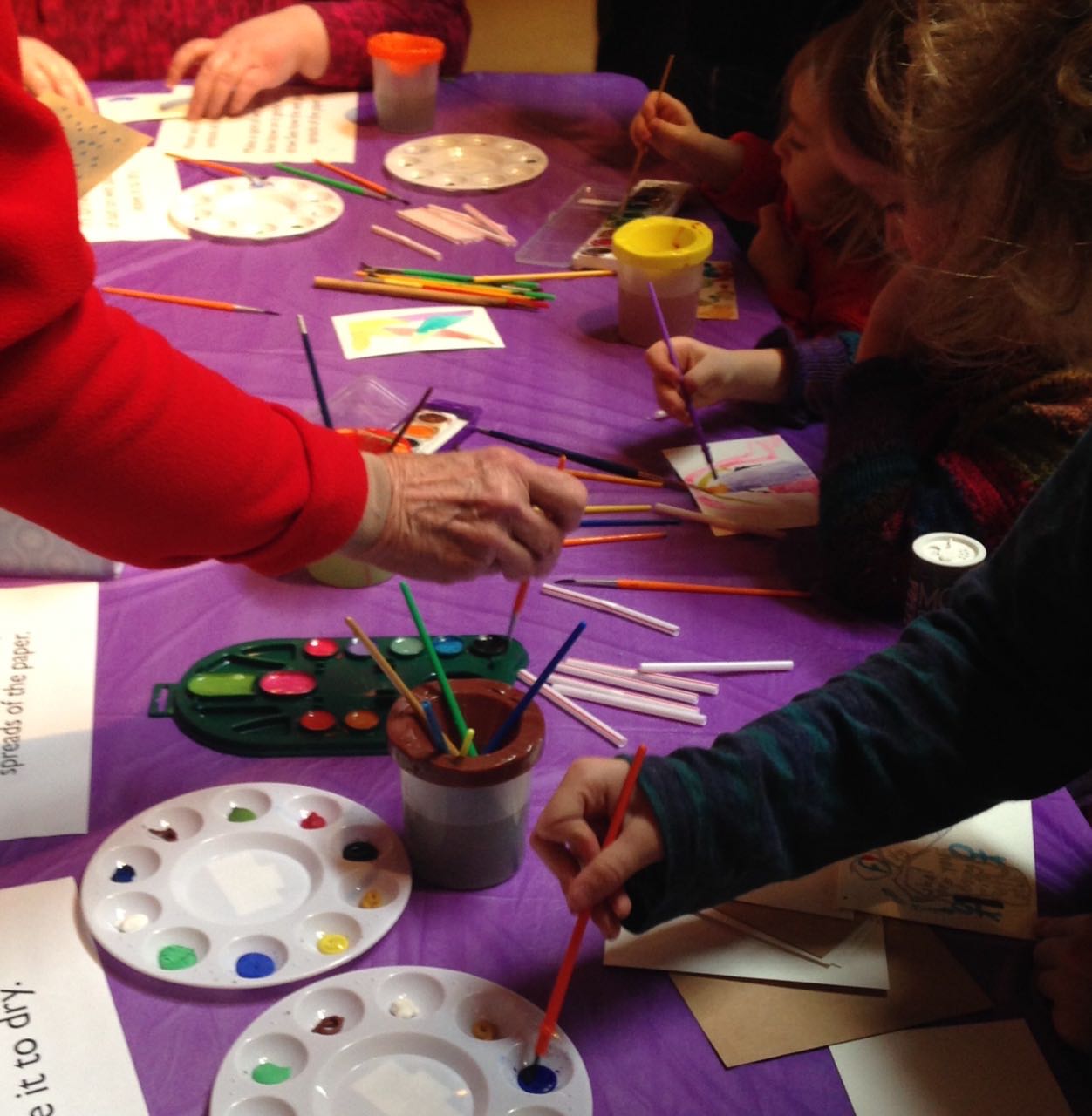
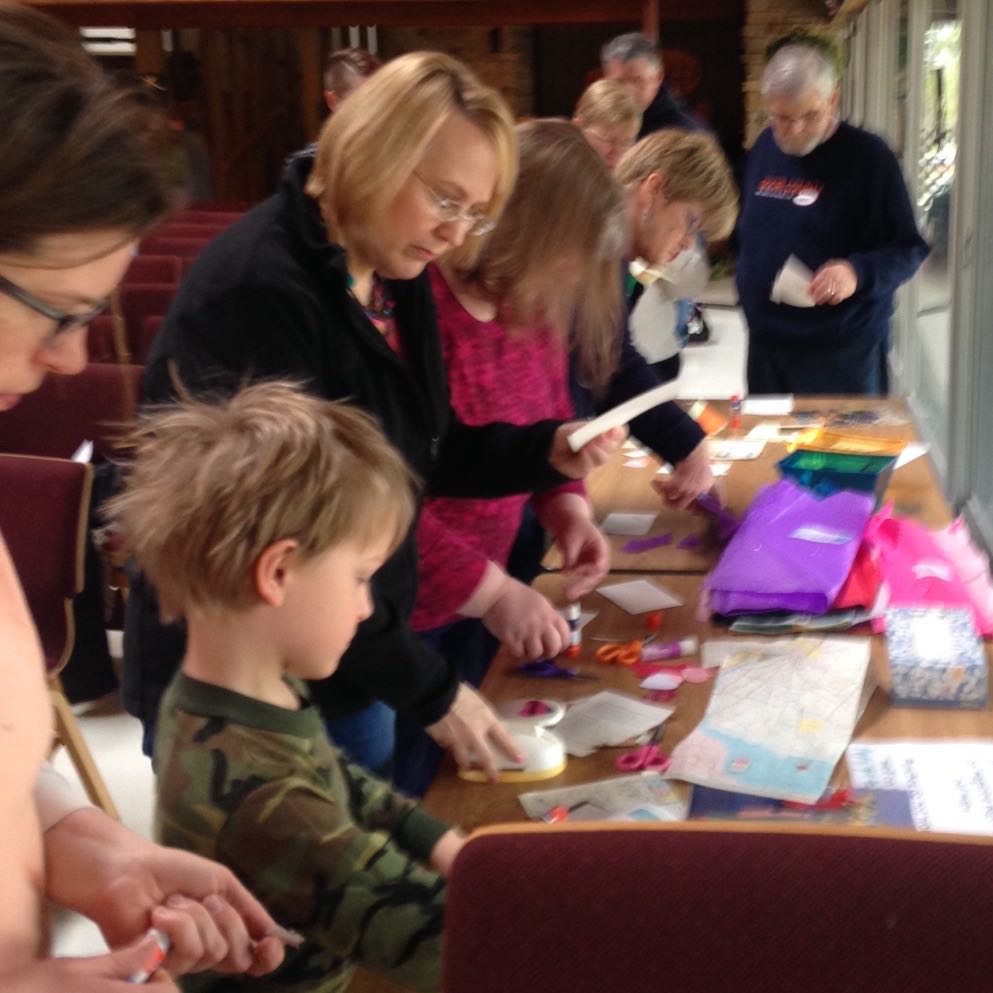
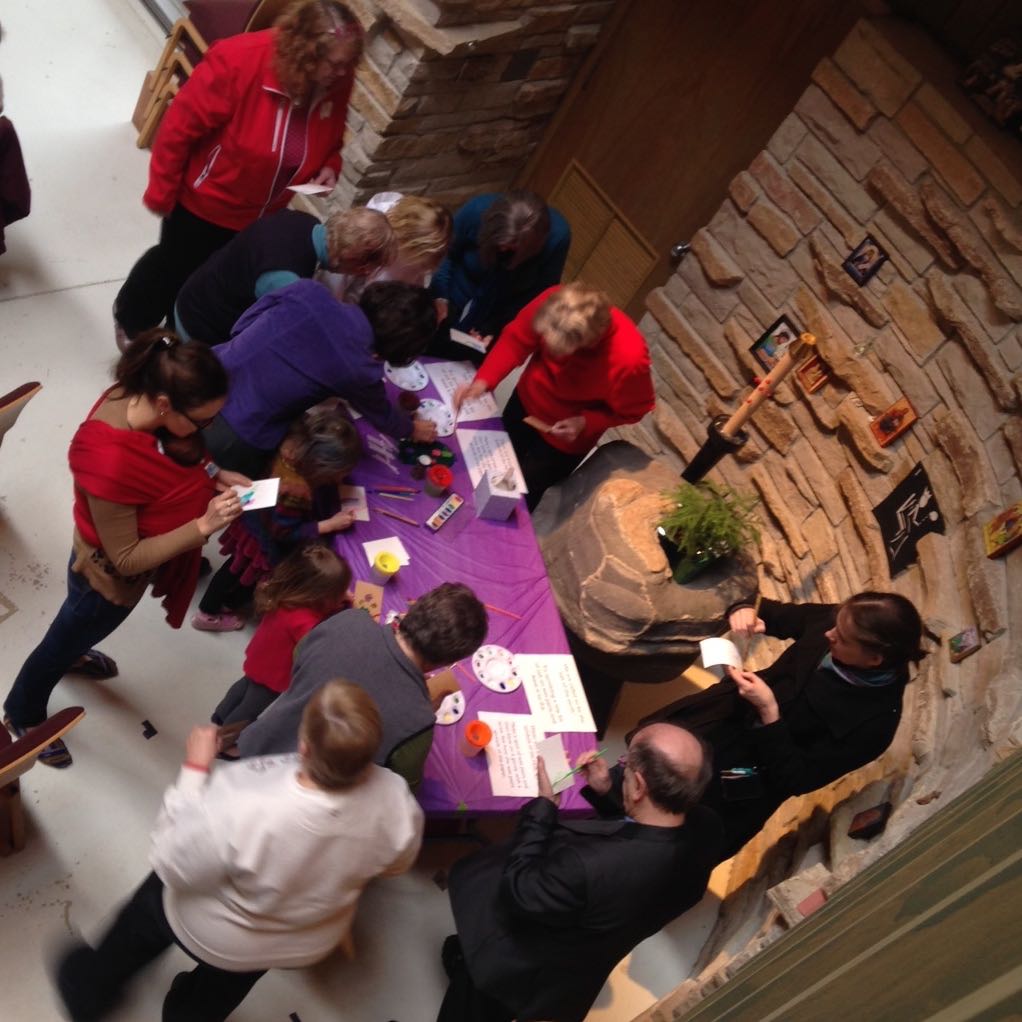
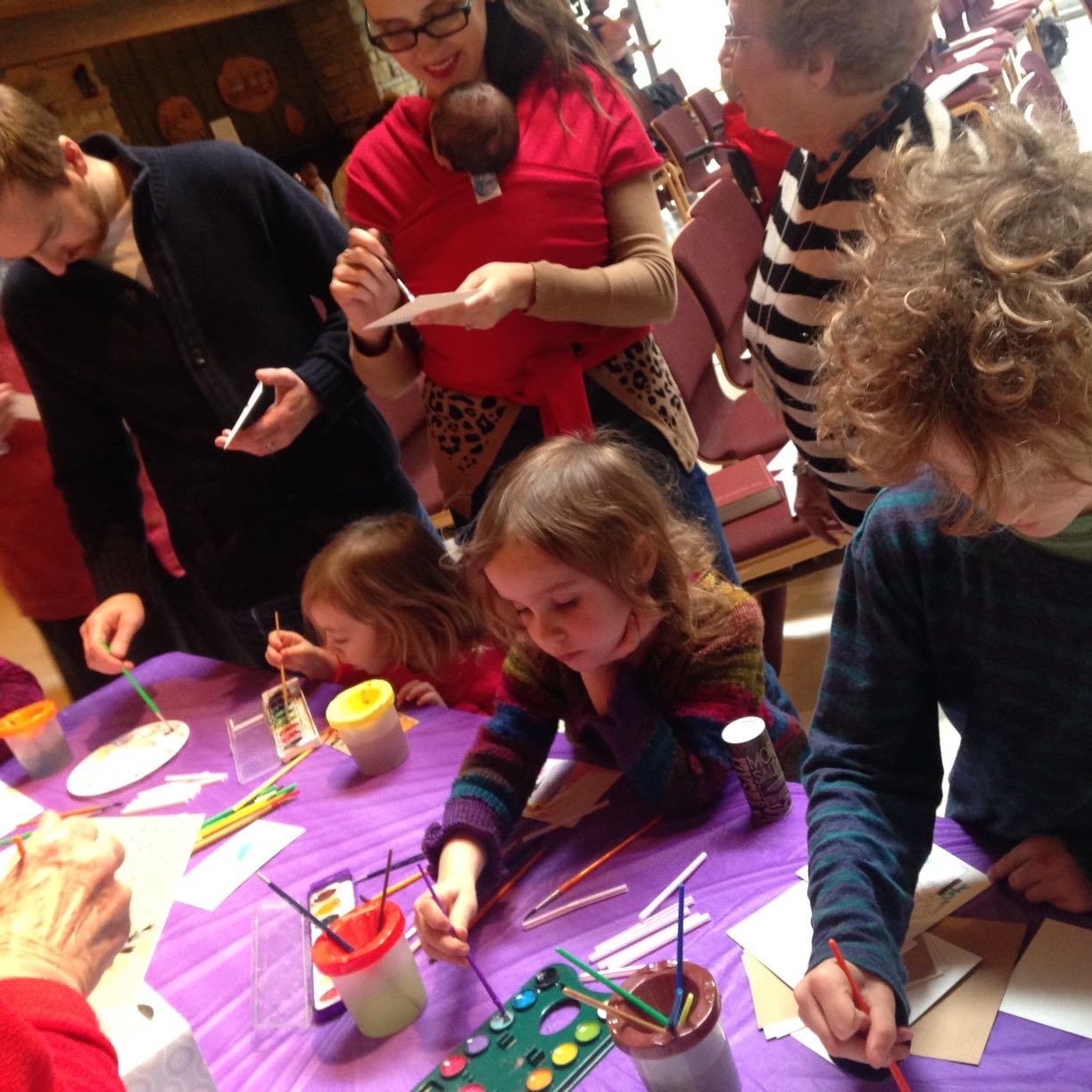
Community Art Micro-Retreat, 4/22

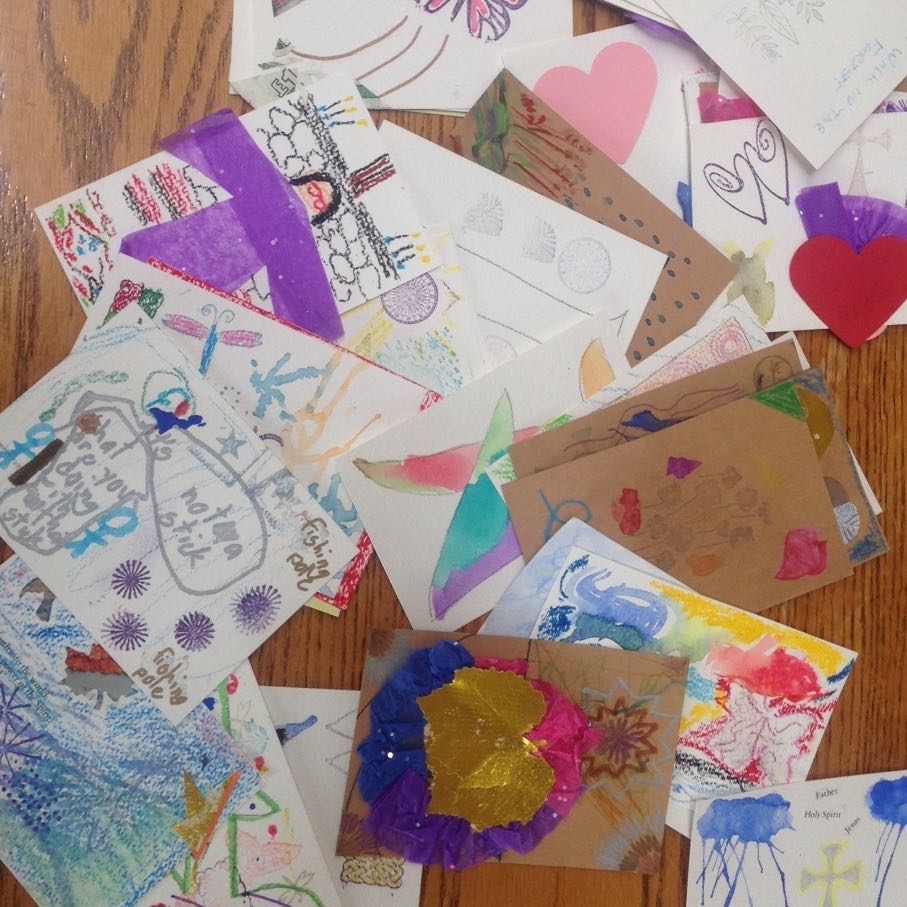
FullSizeRenderToday is the fifth Sunday in Lent. Next Sunday we begin our walk through the Great Story…. In our Sunday school classes, we describe Lent as the season when God’s people get ready for the mystery of Easter. So: are you ready? How have your preparations been going?Have your Lenten practices and prayers opened some space in your heart to receive the power and grief and strangeness and joy of this story, all over again? IMG_1081

… I come to this Sunday, the last “normal” Sunday in Lent, wishing I’d been able to create a little more space for that getting-ready work. So here’s what we’re doing today: we’re taking a little space. I’m giving you a gift that most of us rarely give ourselves: fifteen minutes of silence, with some art supplies and the presence of God in our own hearts, as the prophet Jeremiah reminds us in today’s Old Testament lesson.

IMG_1084All around the room are different art stations. At any station you can pick up a card to decorate. You’ll work with just one card, and carry it around with you. You can draw a picture if you want, but the goal is to fill the card with color and texture. It doesn’t have to be a picture, it can just be shapes or squiggles or patterns or colors or whatever. Just keep going, keep adding, and see what happens.

IMG_1092Of course as we move around this room, which is not really all that big, we’ll interact with each other a little, standing close, passing things to each other. That’s fine. But don’t talk. Respect the quiet. Mostly stay with yourself and with what you’re doing. Let your art come out of your soul without telling yourself, This is ugly, or I can’t do this. Just be playful and enjoy it.  When the time comes to an end – I’ll let you know –  just leave your card at the table where you are and come back to your seat. Our art cards will become something beautiful together, just like us.

IMG_1101You are also welcome, if it’s what you really need, to just use this time to sit in silence, and listen to your own heart, and maybe to God. That’s fine too.

Sermon, March 15

So how about that story from the book of Numbers? I think the best way to get into this story is to imagine that God and Israel are on a long, long, long car trip together. They’re close to the end of the journey here, but that hasn’t improved morale any. The people Israel are tired and fed up, and they start complaining: “Why did we even have to come? This is stupid! We hate it here and there’s nothing to eat! We’re really hungry!” And God says, “There is too something to eat; look, I brought snacks!” And Israel says, “I hate those snacks! I’d rather starve!” And God is so enraged by this response that God lets loose a box of poisonous snakes in the back seat. This is not God’s best parenting moment.

I think it’s best to just admit that the image of God in this story – petulant, vengeful, impulsive, and fond of magical devices – this image of God is not very consistent with the picture of Israel’s God that emerges from the broad sweep of the Hebrew Scriptures. Sometimes, especially in these earliest books of the Bible, God acts much more like a small cantankerous local deity whose religion is only a half-step away from magic, rather than a universal and all-seeing God of deep and gracious purposes for all humanity. We just have to accept that we can’t make every single Hebrew Bible story neatly fit our understanding of God. (Nor can we with every New Testament text, for that matter!)

This is kind of an odd, awkward story. But the Lectionary gives it to us anyway, because John’s Gospel refers to it. In the Numbers story, God decides maybe the poisonous serpents weren’t such a hot idea, and instructs Moses to make a serpent out of bronze and put it up on a pole, and tell the people to look at it. And everyone who is bitten by a serpent and looks up at the bronze serpent, is healed.  In the Gospel of John, Jesus uses that image as an allegory of the Crucifixion, his upcoming death. Jesus on the Cross is like the serpent on the pole: looking upon it brings healing, neutralizes the poison in our veins. Looking upon it brings us salvation. Saves us.

Salvation is just the big fancy church word for being saved. What does it mean to be saved? How many people here have ever been asked if you’ve been saved? What did you say? …

‘Have you been saved?’ How does an Episcopalian answer that question? I’m sure there are some people here who can point to a day, an hour, when God touched their heart and Jesus came into their life and turned things around. Who can say, That’s the day I was saved.

And I’m sure there are a lot of people here whose faith has been day by day, year by year, over a lifetime, with high points and low points, but no single heart-opening moment of transformation. I’m one of those people. When I get asked, Have you been saved?, I sometimes fumble for a simple answer.

Both our Epistle and our Gospel today make mention of salvation, God’s intention to save us, and all humanity. The author of the letter to the Ephesians writes,“By grace you have been saved through faith.” And Jesus, speaking to poor puzzled Nicodemus, a religious leader who has come to him by night seeking to understand his teachings, says, “God did not send the Son into the world to condemn the world, but in order that the world might be saved.” (John 3:17) It’s not a big coincidence that both of of our New Testament texts today talk about being saved, because being saved, and salvation, are pretty major themes throughout the New Testament.

So what does it mean to be saved? What is the nature of the salvation that’s such a central theme in the Gospels and Epistles? Well, there is a whole theological field called soteriology, focused on unpacking and debating different understandings of salvation – soterio, in Greek. I didn’t take a soteriology class in seminary. And there wasn’t any Remedial Soteriology crash course available this week, when this theme seemed to be nudging me for attention. So I took a good look at the one book on the subject that I do have on hand, the Bible itself.

I asked, how is this word used? The verb, sozo, to save, and the noun, soterio, salvation? I’m not a Greek scholar, but the Internet actually makes some pretty good tools available. Here’s what I learned about the word Sozo and its various forms and uses.

To begin with, it’s the root of Jesus’ name, Yeshua, the one who will save. From there it’s used in a wide range of ways, with a common theme or meaning running through. Listen: Sozo can mean to save from a dangerous situation. To heal. To make well. To cause to recover (from illness or injury). To restore. To survive an ordeal. To be rescued. To escape. To be freed. To keep, preserve, or protect.

The situations in which Sozo applies run the gamut from actual real-world illness, danger, or bondage, to the metaphorical and spiritual conditions that mirror those outward realities. And the witness of the New Testament is that God’s power and grace, manifest in Jesus and the Holy Spirit, does all these things, and more, for those who turn to God in yearning, pain, hope, or trust.

What I hear in the dominance of this word, this concept, and in the diversity of the ways in which it’s used, is that this is God’s intention and desire for us, for each and all. Sozo: the name for the central thrust and purpose of God’s action in human history and individual lives. To free, heal, make well, rescue, deliver. To save. This is what God does. God saves. Jesus saves. The Holy Spirit saves.

Terrible things do happen, wars and plagues and the deaths of those we love. There’s no way to opt out of that; it comes with living in human history, having the freedom to make choices, including bad ones, being a body that breaks down and decays. Belonging to a saving God doesn’t mean that we’ll never have to spend a week juggling schedules and losing sleep over a sick child, or watch a loved one deteriorate into a caricature of herself, or let go of things we love to do because of our bodies’ limitations.

Belonging to a saving God means that in all those struggles and infirmities and griefs there is a Presence, a Love, a Force that uses every available tool and space and opportunity to work evil into good. To make the best of bad situations. To save.

Back to that “have you been saved” question: It’s a question of tense, isn’t it? Is salvation something that’s coming, still in the future? Something that’s in process, but not yet completed? Something done, finished, once and for all accomplished? There are places in the New Testament where the salvation of God is described in all these ways. Like the language about the Kingdom of God,  things get kind of messy and paradoxical, perhaps because God’s time works differently from human time. It may be quite true that we have been saved, are being saved, and will be saved. There are several places in the Epistles where the community of believers are named as “those who are being saved” – I kind of like that sense of being in process, on the road, still living into this things we’ve been given. But ultimately, my answer, and I venture to say our answer, to the question “Have you been saved?”, is simply, Yes. It’s done. Jesus tells Nicodemus, God sent God’s son into the world in order to save the world. And the author of the letter the Ephesians says, “By grace you have been saved through faith.”  And he goes on to remind us that we cannot save ourselves, nor earn salvation: “This is not your own doing, it is the gift of God – not the result of works, so that no one may boast. For what we are, God has made us.”

What does that mean for our lives as people of faith? It means we are not trying to earn our salvation. We don’t serve our neighbors or share our resources or worship faithfully in order to get something from God. It’s easy to fall into that mindset; the logic of merit and achievement are deep in our American Protestant ethos. But God is not holding something back. This is not a situation in which if we do enough good stuff, and get enough stickers on our chart, we’ll get that cookie. Rather, God’s saving grace is already at work in our lives. Stirring in deep and secret, subtle and urgent ways to push towards freedom and wholeness, towards human well-being and, more, human flourishing.

Our call as people of God isn’t to earn our salvation, which is already given, but to live in response to it. To live as children of a saving God, sharing our holy Parent’s work: Healing, restoring, freeing, rescuing, protecting. Striving for human flourishing. Not by adding another outreach program, but by keeping that value, that longing, at the center and heart of our life together.

What does it look like to live as “sozo” people, saved and saving, driven by the hope and intention of joining God’s work for human well-being in the community and world around us? We come to that question today in the light of last weekend’s tragedy. I’m not using the word “tragedy” to stake a position here: it’s simply the truth. One citizen of our city lost his life in the course of efforts by an officer of our city to protect the people and the law. This death is especially painful to our sisters and brothers who notice its resemblance to others like it, across our country, in recent months. All of us would rather this death had not happened, and it did. Tragedy is the right word.

All my colleagues in the other Madison Episcopal churches spoke about last weekend’s shooting and the broader issues of race and racism in Madison last Sunday. I wasn’t preaching. So this week I read all their sermons. I read some of them twice. I’m indebted to their words and insights, and grateful for their companionship, especially in these complicated times, especially as I tried to find some words for you today.

We have different politics in this congregation, and no doubt different perspectives on last weekend’s events. But nobody here wants racism in our city. Nobody is proud or satisfied by those statistics about our city, our state, the ones that show that right here, in educated, progressive, affluent Dane County, is one of the worst places in the United States to be born a black child. People of all races were calling for Madison to do better long before Tony Robison was killed. What we’ve seen this past week are those same calls to become the Madison we could be, should be, infused with anger and grief and frustration over the shooting.

My colleague Paula Harris said to her congregation, “Don’t you want to live in a society where everybody has a chance? Where nobody goes hungry? Where everybody can read, and write, and do math? Where everybody can get a decent education, and some kind of meaningful work? Don’t you want to live in a society where the jobs pay enough to support a family? And if somebody gets sick they can get help? That’s the society I want. I want to live in a city where we are at peace with each other, I want to live in a city where it’s fine to disagree because we have so much respect for each other, where we have deep relationships that enable us to listen, and to learn.”

I want those things too. And I believe that God, our saving God, wants those things.

There are no easy answers or obvious solutions here. But we have a touchstone in that word, sozo. In what Scripture tells us about God’s saving power, and our own call to live as children of a saving God, healing, restoring, freeing, rescuing, protecting. Striving for human flourishing.

Being people of salvation, people of sozo, might sometimes mean that we have to listen to voices and experiences that are hard to hear, that challenge us and make us uncomfortable, so that we recognize where our world is broken and in need of saving grace. It might mean that sometimes our tidy lines between church and civil society, faith and politics, get messy. The commemorations of the march in Selma this past week should remind us that it would hardly be the first time. Living our faith as children of a saving God might mean that we have to broaden our view, to consider the incident in light of the pattern, to consider whether what makes Madison great for me might be related in deep and significant ways to what makes Madison terrible for some of my brothers and sisters.

Just as Moses lifted up the serpent in the wilderness, so the Son of Man is lifted up. There he is, on the cross. What do we see when we look at him? A condemned criminal who died a shameful death? A rabble-rouser who got what he had coming to him? A wise teacher who called us to love our neighbors? A confrontational prophet who challenged oppressive social structures? A God who loved us enough to share our human struggles, hurts and confusions? All of the above? …

So the Son of Man is lifted up, so that whoever trusts in him may enter into his abundant and ever-lasting life. A life lived and given for the salvation of the world. Looking to him, may we find the trust, the courage, the hope, to live in response to saving grace.

Announcements, March 12

THIS WEEKEND… 

Rector’s Discretionary Fund offering, Sunday, March 15: On third Sundays, half the cash in our collection plate, and any designated checks, will go towards the Rector’s Discretionary Fund. This fund is a way to quietly help people with direct financial needs, in the parish and the wider community. Thanks for all your generous support.

Sunday School, Sunday, March 15, 10 am: This week, our 3-6 year old class will continue learning about the Faces of Easter, while our 7-11 year old class will explore Psalm 107.

Members of St. Dunstan’s are welcome to join the Zion City Church congregation in their weekly worship service of thanksgiving and praise on March 15.  The service is from noon to 2:00pm.  Meet at St. Dunstan’s at 11:30am to carpool, or meet at Zion City Church shortly before noon.  They are located at 1317 Applegate Road in Madison.  This is just south of the Beltline, off of Fish Hatchery Road.

Evening Eucharist, Sunday, March 15, 6pm: Join us for a simple service before the week begins. All are welcome.

Explorers, Sunday, March 15, 6:30pm: St. Dunstan’s Explorers will meet for light refreshments and wide-ranging conversation. All are welcome. (I will see if I can get any more definitive information by Thursday)

Young Adult Meet-up at the Vintage, Sunday, March 15, 7pm: The younger adults of St. Dunstan’s are invited to join us for conversation and the beverage of your choice, at the Vintage Brewpub on South Whitney Way. Friends and partners welcome too.

THIS WEEK & BEYOND…

Do you like to feed people? Consider joining our St. Dunstan’s Meals Network, to provide a meal for another household in our congregation. New babies, critically ill family members, surgery, or a death in the family are just a few of the occasions for which people might need extra support and compassion. Sometimes it’s just dropping of food, sometimes it’s also sitting with people and listening to how things are going.  Go to the “Sharing Meals” page under “People” on our main page to join our network or, if you’re already part of it, to pick a date on our current meal calendars.

Vestry Meeting, Wednesday, March 18, 6:45pm: The Vestry is the elected leadership body of our parish. Any members are welcome to attend our meetings, to observe or raise questions or ideas.

The Stations of the Cross, Fridays at noon: Walking and praying the Stations of the Cross is a meaningful practice of prayer for many Christians in the season of Lent. On Fridays you are invited to come and join Rev. Miranda in sharing Scripture, meditations from Christian tradition, and prayer as we walk with Jesus on the journey to the cross.

Outreach Committee Meeting, Saturday, March 21, 8-10:30am: All are welcome to join our conversations about how St. Dunstan’s can best serve the world with our resources and our hands. We begin with an optional potluck breakfast at 8am.

Food Forestry at St. Dunstan’s: Plans for 2015, Saturday, March 21, 1pm: All interested or curious folks are invited to come learn about permaculture, our work adding food plants to our woods and grounds over the past two years, and ideas and plans for this year.

Makers’ Guild, Saturday, March 21, 2 – 4pm: Bring your own current handwork – sewing, knitting, painting, beadwork, whatever! – or help out with preparing sample palm crosses and tucking treats into plastic Easter eggs for our egg hunt on Easter Sunday. All are welcome!

Poetry & Spirituality: John Milton, Sunday, March 22, 9am: Paul Thompson will introduce us to the life and work of the great 17th century English poet, John Milton.

“Last Sunday” Worship, Sunday, March 22, 10am:  Our “Last Sunday” pattern of worship is simplified to help children (and adults new to our way of worship) to participate and understand. This month, our Last Sunday worship will invite us all into the final weeks of Lent as we approach the mystery of Easter. Our 8am worship always follows our usual seasonal order of worship.

Christian Formation Committee Meeting, Sunday, March 22, 11:45am:  Our Christian Formation Committee meets to review and plan programs for Easter, the summer, and beyond. All interested folks are welcome to attend and participate.

 Help Spruce up St. Dunstan’s for Holy Week and Easter! Spring Cleaning inside St. Dunstan’s, Sunday, March 22, 12-2pm:  Please see the list of jobs to complete and sign up to help as you are able.  

Grace Shelter Dinner, Sunday March 22, 7pm: Every fourth Sunday, a loyal group of St. Dunstan’s folk provides dinner for residents at the Grace Church shelter, and breakfast the next morning. See the signup sheet in the gathering area to help out.

The Stations of the Cross in Downtown Madison, Friday, March 27, 12pm & 5pm: Walk the story of Jesus’ journey to the cross on the streets of a modern city.  As we walk the fourteen traditional Stations of the Cross, we will reflect together on how we can trace those events in the geography of Madison today – our issues, stories and struggles. We will start on the sidewalk near the Federal Courthouse, across from the Overture Center, and end in the garden at Grace Church on the square. The total walk will be about 1.2 miles, and it takes about 45 minutes. Come at noon or 5pm, as your schedule permits. All are welcome.

“Palm Saturday”, Saturday, March 28, 10:30am – 12pm: Kids, parents, grandparents and friends are invited to make Easter crafts and communion bread, and to take part in a gentle, age-appropriate and participatory telling of the whole Easter story, presented by the youth and adults of our church. This event is best suited for kids ages 3 to 10. All are welcome!

Spring 2015 Chocolate Making: Our Spring Chocolate Event will be after Easter this year. Mark your calendars for Friday evening and Saturday, April 10 – 11. Signup sheets and order forms will be out by mid-March.

LENTEN OPPORTUNITIES…

Tools for Tanzania Giving Opportunity: St. Dunstan’s seeks to raise $800 for a set of tools to send to our sister diocese, the Diocese of Newala in Southern Tanzania. Rev Miranda visited Newala with our diocesan team in 2013, and Bishop Oscar Mnung’a visited St. Dunstan’s last October. As partners in this “diosisi rafiki” (friend diocese) relationship, we look for ways to support one another, both in prayer and practicality. Newala is one of the poorest parts of Tanzania. It is overwhelmingly rural, and most people are small-scale farmers, working with traditional hand tools. During Bishop Oscar’s visit last fall, we learned about better-engineered, modern hand tools that would help farmers in Newala. If we can send one set of new farm tools to Tanzania, then local artisans can use them as models to adapt the tools they make for local use. Then local farmers may be able to grow more food for their families, which means more resources for their churches & communities! A set of tools, plus transport costs, comes to about $1300. We are trying to raise $800 as our contribution; our sister parish, St. Andrew’s Church in Monroe, WI, will raise additional funds as our partners in this project. To contribute, put a check in the offering plate with “TZ Tools” on the memo line. Thanks for your generosity!

Sermon, March 1

I was sick for a good portion of last week, and while lazing around, I read a book. For fun. It’s called Redshirts, by John Scalzi. And if you spent any portion of your younger life watching Star Trek, especially the first series, I recommend it. Redshirts is the story of a small group of people who become junior crew members on a starship called the Intrepid,  the flagship of an interplanetary exploration force. During their early weeks on the Intrepid, they notice several things. There are five senior officers on the ship, including the captain, who nearly always go on away missions, beaming onto damaged ships or plague-ridden planets. That seems… strange. And while the senior crew always mysteriously survive any encounter or adventure, one, two, or more of the junior officers who accompany them on these missions always end up dead… killed by things like sand worms, crazed cleaning robots, and ice sharks. The title of the book, Redshirts, comes from the fact that many of the junior crew members who suffered similar fates on Star Trek in the 1960s wore red uniform shirts on their ill-fated journeys.

The main characters in the novel also notice that sometimes they seem to be living their own lives, and thinking their own thoughts. But at other times, especially moments of excitement, on a mission or facing an enemy, they get caught up in something bigger. Their words and actions are no longer their own, but follow the demands of the narrative, driven by the drama. Almost as if there was a script, and they were just characters in the hands of a merciless writer. Eventually they discover that they are somehow living as extras in an early-2000s era TV series, a B-grade Star Trek knock-off. When the writer decides to kill someone as a dramatic moment before a commercial break, a real person on their real starship … dies. At one point in their investigations, a more experienced member of the crew warns them: Stay away from the Narrative. Stay away from the Narrative.

Why the book report? Well, you may have noticed that it’s Lent. Lent is the season in which Christians prepare for the mystery and joy of Easter. By ancient tradition, it is a season of penitence, a season to examine our lives, repent of our sins, and try to live more fully as God’s people. It’s the season in our church’s year when the word and notion of Sin stands most in the center of our life and liturgy. So I’ve taken it as part of my work as a preacher and teacher to preach at least one sermon, every Lent, about what we’re talking about when we talk about sin. To offer some fresh way to come to grips with this difficult, important, dangerous, powerful word. So welcome to this year’s Sin sermon.

In Lent we begin our worship with a litany of confession. I appreciate our Lenten litanies, the Great Litany and this lesser Litany, from the Ash Wednesday liturgy, that we use weekly. It feels good for my soul to lay out, line by line, all the small and large ways that I fall short of my intentions for my own life. Anger at my own frustration: check. Intemperate love of worldly goods and comforts: check. Waste and pollution of Creation: Check. I am sorry, God. So very sorry. I believe in the power of the Litany as a spiritual exercise. And, at the same time,I acknowledge its limits.

Marcus Borg, the great Scripture scholar and theologian who passed away a few weeks ago, wrote in his book Speaking Christian that in the church, we have tended to overfocus on sins, and underfocus on Sin. That’s Sin, singular, with a capital S. Sins are the ways that we as individuals fall short of the call of Christ on our lives and hearts. Things done which we ought not to have done, things undone which we ought to have done. What Francis Spufford wonderfully renames as “The Human Propensity to Mess Things Up.” Abbreviated HPtFtU. I have found Spufford’s terminology helpful; some folks who find the word “sin” strange, artificial, or loaded, can readily recognize their own propensity to mess things up, and offer it to God for healing.

Talking about sins, the reality of that propensity in all our lives, is part of the work of the church, and of this season. But do we talk enough about Sin? Singular, capital-S Sin? The great big word for what ails us. For the Human Condition. For what makes the world and our lives imperfect, painful, broken. Do we talk enough about Sin, the flawed and harmful status quo that is simply daily life, the way things are?

Borg suggests that the church’s overfocus on sins has kept us from taking a hard look at Sin. Is this what we tell each other, what we tell ourselves? – “If I can just fix my life, live up to my own standards, and everybody else’s, and God’s, and be a good person, things will be OK.” That’s an impossible illusion. You can’t do it, and even if you could, it wouldn’t save you from pain, from struggle, from life.

What if our calling as people of God is not primarily to help our members correct their sins, but to be a community that bravely names and grapples with Sin, and its grip on all of us?…

Walter Brueggeman – another great Scripture scholar of our time – gave a speech in 2005 about the scripts that run our lives. He writes that our lives and our communities are organized by and around particular scripts. We are taught the scripts of our family, culture, and society, in explicit ways but also, overwhelmingly, in implicit ways, simply by growing up and being formed by images, assumptions, expectations, labels. There are, of course, many scripts in our complex society. A political debate, for example, is a clash of conflicting scripts about what’s wrong with a state or a nation, and how to fix it. But Brueggeman steps back and says, We all, left and right, live under the umbrella of an overarching 21st-century American script. He calls it “therapeutic, technological, consumerist militarism.”

Our dominant script is therapeutic because of the near-universal assumption that the goal of human life is happiness and freedom from pain, and that there is a product or treatment to counteract every pain, discomfort, or trouble that life brings us. That seems so natural, doesn’t it? But hold it up against Jesus’ words in today’s Gospel, his call to his followers to hold their own lives lightly and walk willingly into risk and suffering, when such suffering may serve God or benefit a neighbor. This assumption we have, that pain is a problem to be solved – that pain is a problem that CAN be solved – it is not the assumption of every human culture. It is not the assumption of Scripture. And it is, in fact, not true.

Our dominant script is technological because of the near-universal assumption  that, in Brueggeman’s words,“everything can be fixed and made right through human ingenuity… There is nothing so complex or so remote that it cannot be solved.” But of course! These are the days of miracle and wonder! Look at all that we’ve achieved; surely anything is possible. And yet, this is not the assumption of every human culture; nor of Scripture; and it is, in fact, not true.

Our dominant script is consumerist, because we live in a culture that teaches us that the world and its resources are infinitely available to us; that if you want it, you need it; that we are defined by our possessions; that she who dies with the most toys, wins; that our deepest yearnings and aspirations can be satisfied with a little help from a credit card. I have a healthy suspicion of the consumerist mentality, and yet this stuff still drives me; it’s deep, it’s powerful. And again: the idea that wholeness, happiness, satisfaction are available for purchase – this is not the mindset of every human culture. It is emphatically not the mindset of Scripture – as Jesus reminds us today, you could gain the whole world, and still lose your life, your soul. The script of consumerism, too, is not true.

And finally, our dominant script is militaristic – grounded in the assumption that our way of life is under threat and in need of protection. That if we let too many of Them in, We might not have it so good anymore. That if we question the Powers that Be, we must not love America or appreciate how good we have it. Our fundamental cultural militarism is based on a mindset of scarcity and fear. And while some of that thinking may indeed be present in every human culture -Scripture tells us that God has called us away from it, again and again and again. Look at Jesus and Peter, arguing, in today’s Gospel: Peter is looking for victory in terms of human power. He says, You’re the One, Jesus! You will ride into Jerusalem in triumph, call down your angelic army to kick out the Romans, restore Israel to greatness, and rule as our holy King!  And Jesus says, Nope. That’s not the story we’re living, Peter. Because that story, too, is false. Has always been false. We can’t protect or fight our way into justice, peace, or true human flourishing.

This script, the therapeutic, technological, consumerist, militarist script of early 21st century America, this script promises to keep us safe and make us happy. This isn’t about Republicans or Democrats; all our parties are invested in versions of this narrative. It’s the air we breathe, the water we swim in. It directs how we organize our lives, set our goals, solve our problems, spend our time. And it’s a lie.

Brueggeman writes, “That script has failed… We are not safe, and we are not happy.  [That] script is guaranteed to produce new depths of insecurity, and new waves of unhappiness… [Our] health depends, for society and for its members, on disengaging from… that failed script.” In a very real sense, we are all redshirts in a narrative that was not written to benefit us. There’s a moment in the book, Redshirts, when one character asks another, I know you’re a man of faith; but how can you still believe in God, when God keeps putting us in these terrible situations? And the second character says, That’s not God. God is not the writer of the narratives that are killing us. These are human scripts.

Many aspects of the scripts that drive our lives – the narratives that suck us in and write our stories for us – they were composed without our best interests at heart. They were written to protect power and privilege. To maintain a social and economic status quo. To continue concentrating wealth in the hands of a few. To keep most of us too distracted or busy or superficially satiated to ask hard questions. Stay away from the Narrative, indeed!…

Marcus Borg, talking about the churches’ language of Sin, points out that Scripture contains several dominant images of what ails us, as human beings. One of those images is bondage. The archetypal story, though not the only one, is of Israel’s time of slavery in Egypt. Their time, their work, their lives not their own.  The Book of Exodus doesn’t tell us  that the Israelites were in bondage because they had sinned. Their enslavement wasn’t a punishment. It was just a thing that happened. A thing that humans do to each other. And the solution to their situation of bondage wasn’t forgiveness: it was liberation.

That story and that image come up again and again, in the Bible and in Christian history: the human condition as bondage, enslavement, subjugation to some Pharaoh or another; God’s grace coming to us as freedom, the parting of a sea, the breaking of chains, the bursting open of a prison door; the call into openness and light and the uncertainty and hope of new paths.

Borg writes, too, about what bondage can look like when we take it into ourselves, internalize it: he names it as sloth. Sloth. One of the seven great sins named by the early church. Sloth isn’t laziness, exactly; it’s deeper and darker. Sloth is apathy, passivity. Dejection. Despair. Nihilism. It can even manifest as a crippling restlessness – the kind that makes you hit Refresh on Facebook again, instead of doing something worth doing, like writing a poem or washing the dishes.

Borg describes Sloth as “leaving it to the snake.”  He explains, “The reference is to Adam and Eve in the Garden of Eden [complacently] letting the serpent tell them what to do…. You are ‘going along’ with what you have heard, with how things are.” Sloth is what bondage looks like when you wear it on your soul.

So… what do we do? If we are even a tiny bit persuaded by the idea that we are maybe possibly in bondage to a dominant script that promises us safety and happiness but actually delivers fear, inequality, alienation and struggle?

Here’s what happens in the novel. The characters start to notice.They notice when the narrative takes over, and tries to suck them in, feed them words and ideas that aren’t their own and that put them at risk. They talk about it. Together, they become able to name the Narrative and its destructive impact. Together, they find some ways to evade the Narrative; but they decide that their own escape isn’t enough, because it leaves others still subject to the lethal script. They decide challenge the Narrative itself, to try to change the very script of their reality.

In the book, they use a tidy bit of black-hole time travel to go back to 21st century Earth and convince the TV show’s writer to stop killing them. In the real world,

our driving narratives are pretty entrenched. We can’t change them by convincing one writer. But we can change ourselves.  We can choose to ground our lives in other narratives. In Brueggeman’s words, “[we can abandon that dominant] script in favor of a new one, a process that we call conversion.”

What if our calling as people of God is not primarily to help our members correct their sins – but to be a community that bravely names and grapples with Sin, and its grip on our lives?… With that which holds us in bondage, which I am naming today as a Script, a Narrative, the therapeutic, technological, consumerist, militarist logic of our nation and our century? What if our calling as people of God is, in part, to notice and share and muster the courage, together, to name that Narrative and its costs and victims, instead of leaving it to the snake, sunk in weariness and apathy?

Brueggeman sees no “What if” about it. He writes,  “It is the task of the church and its ministry to detach us from that powerful script, … through the steady, patient, intentional articulation of an alternative script that we testify will indeed make us safe and joyous… “The claim of that alternative script,” he continues, “is that there is at work among us a Truth that makes us safe, that makes us free, that makes us joyous in a way that the comfort and ease of the consumer economy cannot even imagine…. The slow, steady work [of the church is to make us able,] personally and communally, … to renounce old scripts of death and enter new scripts of life.” Or as Paul puts it in the Letter to the Romans: “Be not conformed to this world, but be transformed by the renewing of your mind.”

It is hard and uncertain and strange to step out of the dominant script, to wade against the powerful currents of our culture and way of life. The alternative script isn’t straightforward or tidy. In many respects it’s much messier than the Narrative that drives our world. But that uncertain, ambivalent, wondering space is exactly the kind of space where the Holy spirit can find us, and work with us and in us.

Maybe this is what a church that engages with Sin, singular, big-S, human-condition Sin, looks like:  A plucky band of redshirts talking together about what we see, in our daily lives and the world around us, of the ways that the dominant narrative closes minds, damages lives, limits possibilities, holds us in bondage. Finding courage in our community, and wisdom in our Scriptures, and power in the Spirit of God, to begin to live by another script, the messy, sprawling, lifegiving story being written and rewritten, day by day, century by century,  by the One whom we name as the Author of our salvation.

Announcements, Feb. 26

Episcopal 101, Sunday, March 1, 9am: An ongoing exploration of the Episcopal Church for new and long-time members. This month (POSTPONED from February), a whirlwind tour of Anglican history. All are welcome!

 Birthdays & Anniversaries will be honored this Sunday, March 1, as is our custom on the first Sunday of every month. Come forward after the Announcements to receive a blessing and the Community’s prayers.

 Healing Prayer, Sunday, March 1: This Sunday, one of our ministers will offer healing prayers for those who wish to receive prayers for themselves or on behalf of others.

 MOM Special Offering, Sunday, March 1: Half the cash in our offering plate and any designated checks will be given to Middleton Outreach Ministry’s food pantry.  Groceries are welcome gifts, too. Here is a list of the top ten items needed at this time: cereal, sugar, canned chicken/turkey, cooking oil, toothpaste/toothbrushes, diapers (sizes 4, 5 and 6), paper towels, and facial tissue. MOM is always in need of quality bedding items such as comforters, sheets, blankets and towels. Thank you for all your support!

Deacon Sybil Performs, Sunday, March 1, Coffee Hour: Did you know that our beloved deacon Sybil Robinson, who still faithfully proclaims the Gospel for us at the age of ninety, is a retired professor of theater and an actress? She will share two prepared pieces, one serious and one comic, for us over Coffee Hour.

Backpack Snack Pack Prep, Sunday, March 1, 11:45am: The kids and families of St. Dunstan’s are invited to join our Madison Vineyard Church neighbors in preparing “Backpack Snack Packs,” to help local school children from low-income households to have nutritious snacks available over the weekend. We’ll work in the Meeting Room at St. Dunstan’s following the 10am service.

Let’s Get Uncomfortable! Conversations about Racism and Racial Justice: Whether you’ve got lots of questions or whether you think you’ve got it all figured out, come explore more deeply with others who share your faith, in this Lenten series. This week we meet at 1pm on Sunday, March 1, and on Wednesday, March 4 at 7:15pm. Talk with Rev. Miranda with questions or for the complete schedule.

 Evening Eucharist, Sunday, March 1, 6pm: Join us for a simple service before the week begins. All are welcome.

Guest Preacher, Sunday, March 8: The Rev. John Rasmus, one of our treasured resident retired clergy, will preach about the faith and influence of John and Charles Wesley (feast day, March 3). Thanks to Father John for sharing his voice!

Bible Study, “Dwelling in the Word”, Sunday, March 8, 9am: Every second Sunday, adults and youth are invited to gather in the Meeting Room for an opportunity to engage some of the holy stories of Scripture with our minds, hearts and imagination.

Sunday School, Sunday, March 8, 10am: This week, our 3-6 year old class will begin exploring the Faces of Easter, while our 7-11 year old class will reflect on Psalm 19.

Spirituality of Parenting Lunch, Sunday, March 8, 12 noon: All who seek meaning in the journey of parenthood (at any age or stage) are welcome to come for food and conversation. Child care and a simple meal provided.

Support our Sunday School! Here are a couple of ways you may be able to help out with our growing and energetic Sunday school classes for kids ages 3-6 and 7 – 11.

1. Assist in a classroom. The teachers for our younger class are looking for helpers to help manage the room and watch over play and crafts. This is a lovely bunch of kids; wouldn’t you like to get to know them? Sign up for as little as one date for the months ahead, on the yellow sheet in the Gathering Area below the big calendar.

2. Give us your Lego. Do you have a stash of Lego gathering dust in a closet or basement? There are some great new approaches to doing Sunday school with Lego, and our older class would LOVE to try it out. If you have some Lego to contribute, please bring it in! Only actual Lego, please, but Lego in any amount and of any age is welcome.

Members of St. Dunstan’s are welcome to join the Zion City Church congregation in their weekly worship service of thanksgiving and praise on March 15.  The service is from noon to 2:00pm.  Meet at St. Dunstan’s at 11:30am to carpool, or meet at Zion City Church shortly before noon.  They are located at 1317 Applegate Road in Madison.  This is just south of the Beltline, off of Fish Hatchery Road.  Five of us attended their service in January, and came away inspired and blest!

The Stations of the Cross in Downtown Madison, Friday, March 27, 12pm & 5pm: Walk the story of Jesus’ journey to the cross on the streets of a modern city.  As we walk the fourteen traditional Stations of the Cross, we will reflect together on how we can trace those events in the geography of Madison today – our issues, stories and struggles. We will start on the sidewalk near the Federal Courthouse, across from the Overture Center, and end in the garden at Grace Church on the square. The total walk will be about 1.2 miles, and it takes about 45 minutes. Come at noon or 5pm, as your schedule permits. All are welcome.

Spring 2015 Chocolate Making: Our Spring Chocolate Event will be after Easter this year. Mark your calendars for Friday evening and Saturday, April 10 – 11. Signup sheets and order forms will be out by mid-March.

Tools for Tanzania Giving Opportunity: St. Dunstan’s seeks to raise $800 for a set of tools to send to our sister diocese, the Diocese of Newala in Southern Tanzania. Rev Miranda visited Newala with our diocesan team in 2013, and Bishop Oscar Mnung’a visited St. Dunstan’s last October. As partners in this “diosisi rafiki” (friend diocese) relationship, we look for ways to support one another, both in prayer and practicality. Newala is one of the poorest parts of Tanzania. It is overwhelmingly rural, and most people are small-scale farmers, working with traditional hand tools. During Bishop Oscar’s visit last fall, we learned about better-engineered, modern hand tools that would help farmers in Newala. If we can send one set of new farm tools to Tanzania, then local artisans can use them as models to adapt the tools they make for local use. Then local farmers may be able to grow more food for their families, which means more resources for their churches & communities! A set of tools, plus transport costs, comes to about $1300. We are trying to raise $800 as our contribution; our sister parish, St. Andrew’s Church in Monroe, WI, will raise additional funds as our partners in this project. To contribute, put a check in the offering plate with “TZ Tools” on the memo line. Thanks for your generosity!

Lent Letters:  It’s an ancient custom of the church for members to confess their sins to a priest and receive God’s forgiveness. Sometimes we carry old hurts or regrets that need to be told, but are hard to tell someone we see regularly. “Lent Letters” is a new approach, inspired by the tradition of sacramental confession and reconciliation in Lent.  You write a note about something you want to lay down, and sent it to another priest to be blessed and offered up. See the “Lent Letters” station in the Gathering Area, from Ash Wednesday onwards, to learn more. Rev. Miranda is also very willing to meet with you for the Rite of Reconciliation (BCP p. 447) during Lent or at any time.


6205 University Ave., Madison WI

St. Dunstan's Episcopal Church